The Year-End Tax Write-Off You Can Claim—Even Without Cash on Hand

Introduction: The Year-End Scramble
For many small business owners, the end of the year brings a familiar sense of stress. It’s the time you start trying to piece together your financials to understand what your profit and loss statement looks like and, more importantly, what your tax liability will be. It’s a scramble to make sense of the numbers and figure out what the next year’s tax bill will look like.
This often leads to a reactive posture. You discover your full financial picture in February of the following year, long after the window has closed to make strategic moves that could have saved you thousands. It can feel like you’re simply bracing for impact, with no ability to change the outcome.
But what if you could shift from being reactive to proactive? A recent Q&A session with business owner Richard Marvel and accountants Ryan and Karen from FirmTrack Solutions revealed a few powerful insights that can change this dynamic. As a financial strategist, I see this reactive scramble all the time, and their conversation perfectly highlighted three shifts in thinking that can break the cycle.
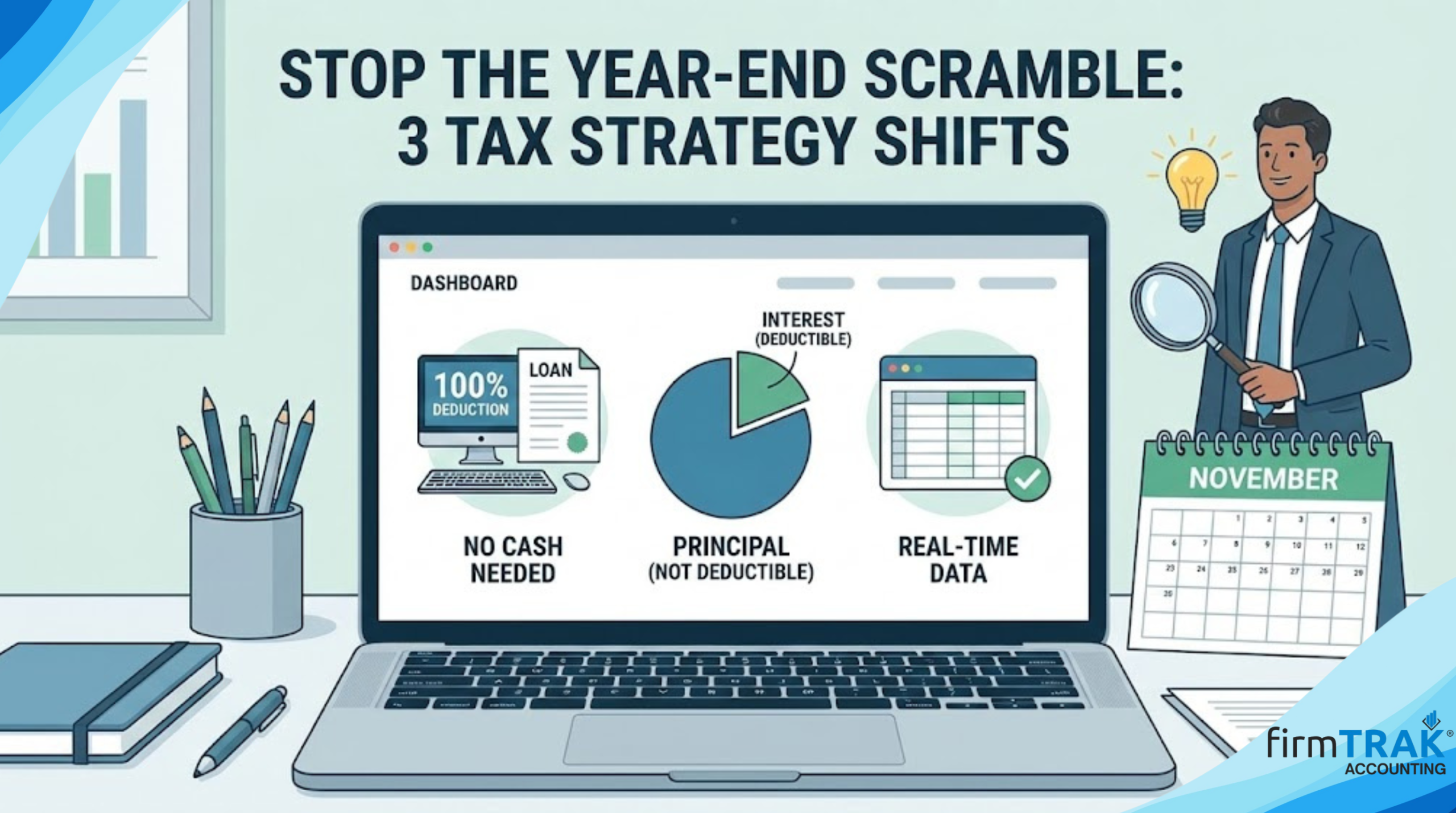
Takeaway 1: Myth: You Need Cash to Claim a Write-Off. Reality: You Only Need to Acquire the Asset.
Let’s tackle the biggest mental hurdle I see business owners face. The central question Richard posed to his accountants was a common one: how can I get a big tax write-off to offset income if I don’t have the cash on hand to make a big purchase? Many owners believe if they don’t have $25,000 in their operating account, they can’t possibly get a $25,000 tax write-off. This isn’t true.
Thanks to tools like bonus depreciation, you can get a 100% deduction for certain assets in the year you acquire them. For example, if you need $25,000 worth of new computers to offset your income for 2025 but don’t have the cash, you can finance the purchase. Even though you haven’t paid for the computers outright, you can still take the full $25,000 deduction in 2025.
The core insight here is that the act of acquiring the asset (the purchase) and the act of paying for it (the financing) are two separate transactions in the eyes of tax law. Transaction one is the purchase: you add a $25,000 asset (computers) to your books. Transaction two is the financing: you add a corresponding $25,000 liability (the loan) to your books. The tax deduction is tied to the acquisition of the asset, not the cash leaving your bank.
As accountant Ryan explained:
You’re basically creating two separate transactions on your books and they they go from there based on the tax rules…
Takeaway 2: Myth: Your Entire Loan Payment is a Deduction. Reality: Only the Interest Counts.
This naturally leads to the next question, which the business owner in the discussion immediately asked: what happens in the following years with the loan payments? Like many owners, his initial thought was that the entire payment must be a write-off. The accountants were quick to clarify this critical, and often misunderstood, distinction.
It’s critical to understand that your loan payment consists of two distinct parts:
Principal: This is the portion of the payment that reduces your loan liability. Since you already received the full tax benefit upfront via bonus depreciation, paying down the principal is not a deductible expense.
Interest: This is the cost of borrowing the money. The interest portion of your loan payment is a deductible expense that reduces your taxable income over the life of the loan.
If your loan has a 2.5% interest rate, only the small portion of your monthly payment covering that interest is deductible—the rest is simply paying down the principal you already got a deduction for. This is more than just a bookkeeping rule; it’s essential for cash flow forecasting. If you mistakenly think your entire loan payment is lowering your tax bill, you will be in for a nasty surprise.
Takeaway 3: Your Most Powerful Tool is Proactive Bookkeeping
This brought Richard to his personal “aha” moment: while tax tactics like bonus depreciation are powerful, they are only effective if you have the information needed to use them. The ultimate financial strategy isn’t a secret loophole; it’s having real-time, accurate information about your business’s performance.
Consider these two scenarios Richard described:
The Old Way: Waiting until February of the next year to reconcile all income and expenses from the previous year. By then, it’s too late to make any tax-saving moves.
The New Way: Having up-to-date monthly reporting that provides a clear picture of your profit and potential tax liability before the year ends.
This timely insight is what transforms you from a passive observer to an active strategist. When you know where you stand financially in November, you can make an informed decision to purchase that new equipment and take advantage of bonus depreciation. Without that data, you’re flying blind.
Richard perfectly described the feeling of being powerless without current data:
…it’s almost like I’m watching a crash happen in front of me and there’s not a thing I can do about it because I don’t know what my financial picture is for 2025 until the next February…
Conclusion: From Reactive Panic to Proactive Planning
The key to reducing your tax liability and making smarter business decisions is shifting from a reactive, year-end panic to proactive, year-round planning. By understanding that acquiring an asset (Takeaway 1) is separate from paying for it, and that only the interest on that payment is deductible later (Takeaway 2), you can see why real-time bookkeeping (Takeaway 3) is the linchpin that makes these powerful year-end decisions possible.
Understanding that you can finance a major purchase and still claim an immediate, significant tax deduction is the first step. Pairing that knowledge with timely financial reporting empowers you to take decisive action that can fundamentally change your company’s financial outcome for the year.
Now that you know what’s possible, what one decision could you make before year-end to change your financial future?

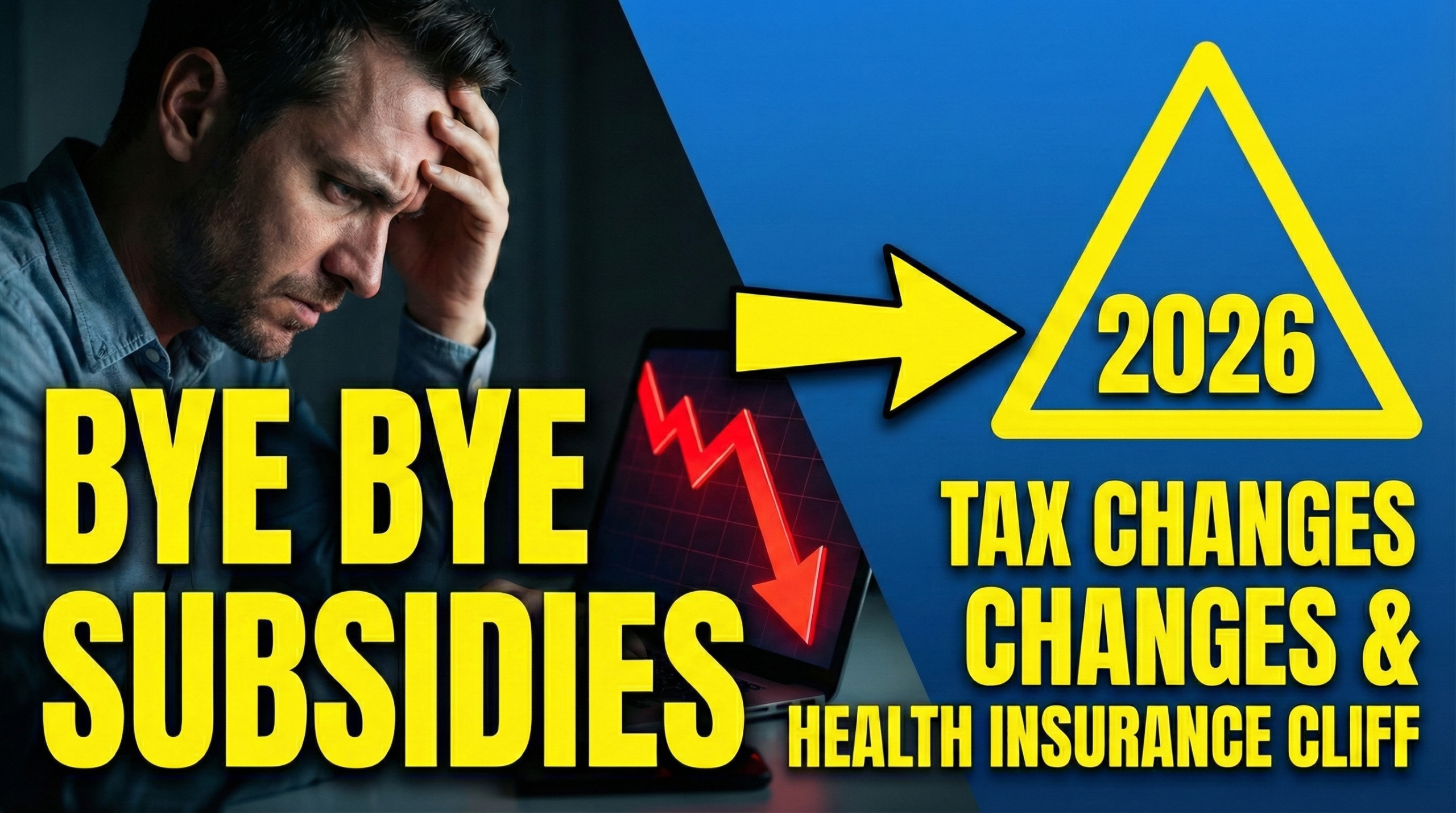
The $18,000 Health Insurance Shock: 3 Reasons Your Premiums Are About to Explode

The annual health insurance open enrollment period is a familiar source of anxiety over rising costs. But for millions of Americans—especially small business owners and individuals on the open marketplace—the price increases for 2026 are not just a routine bump. The routine bump is about to become a financial earthquake that will force devastating decisions.
——————————————————————————–
Reason 1: The Sticker Shock Is Unprecedented
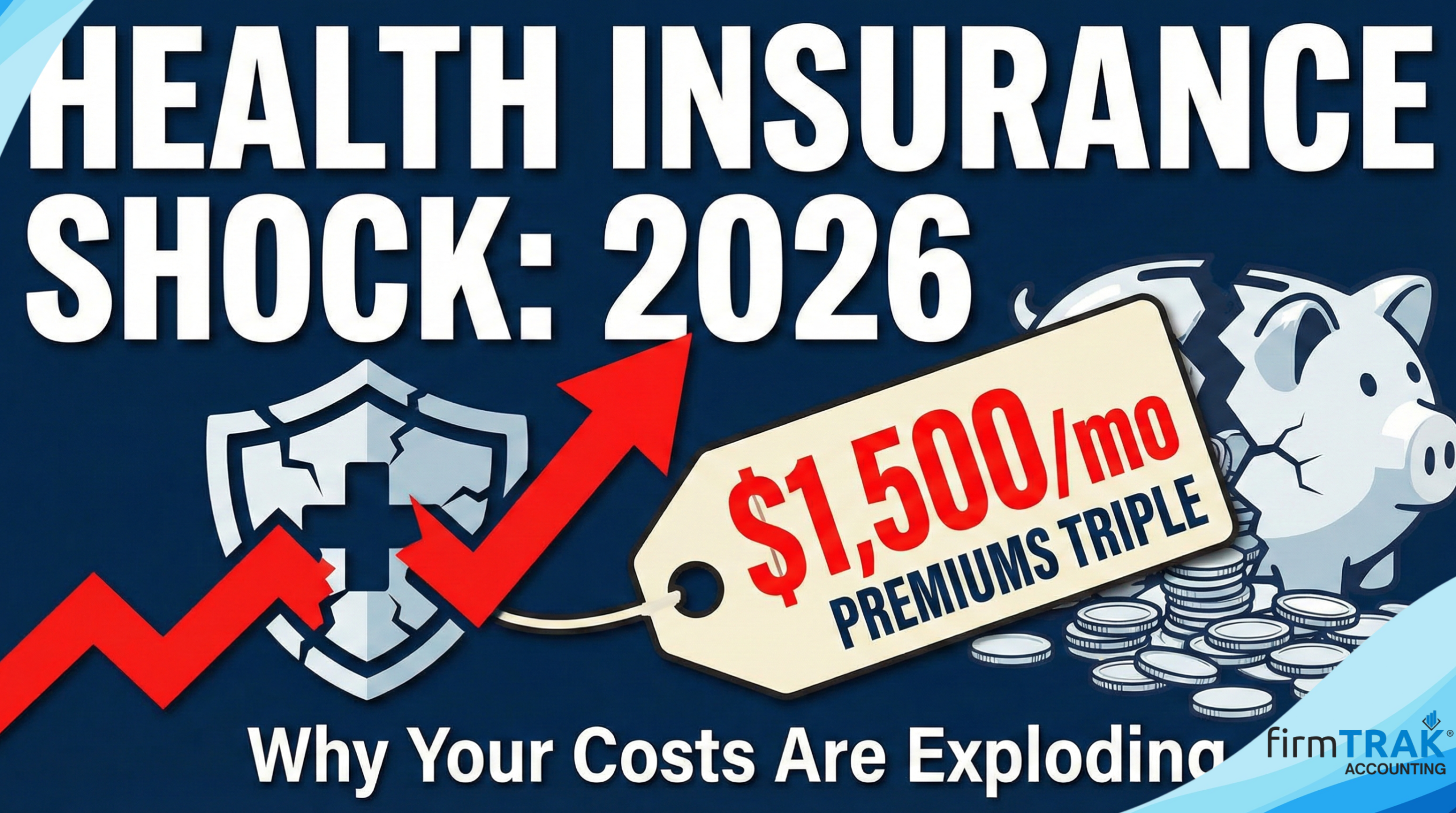
For many, health insurance costs aren’t just rising; they are set to more than triple. The scale of this increase is staggering. Take the example of Karen Whis Kwakowski, a small business owner in Illinois and partner at Firm Track Solutions. Her monthly premium for full coverage health insurance for 2026 is jumping from just under $400 to an astonishing $1,500—a stark increase she describes as 150%.
This translates to a new annual cost that can cripple a household budget. As Karen notes, the financial burden is immense:
“…if I want full coverage health insurance it’s going to cost me $1,500 a month…which means that that totals out to $18,000 annually”
This is not an isolated incident. Ryan Alman, another small business owner and Karen’s partner at their firm, is facing a similar reality. His household’s monthly premium is doubling from around $500 to $1,100. An unexpected expense of this magnitude doesn’t just destabilize a budget; it shatters it, forcing families to question everything from their savings to their homeownership.
Reason 2: The Federal Safety Net Has Vanished
A key reason for the jump is the expiration of federal subsidies. The Affordable Care Act (ACA) provided enhanced subsidies that could reduce out-of-pocket costs by as much as 75% for those with qualifying incomes. For the 2026 plan year, those subsidies are now gone.
This change particularly affects individuals and households earning around or over $60,000 annually, who now receive no tax relief and must absorb the full, unsubsidized cost of their insurance premiums. The one-year extension on these enhanced subsidies was not included in subsequent federal budgets, causing them to expire as scheduled.
The result is a policy failure with direct and painful consequences for millions, as Karen reflects:
“I think that it’s a it’s a real shame that this this healthc care policy has failed but fail it has”
Reason 3: Market Competition Is Disappearing
In some states, a lack of competition is making a bad situation worse. Illinois serves as a clear case study. Following the folding of Health Alliance, an insurance provider in the state, Blue Cross Blue Shield has been left as a virtual monopoly.
This lack of competition is directly connected to the dramatic price increases seen in the state for 2026. When consumers have few or no alternative insurance providers, they lose all leverage. This leaves people like Karen forced to consider “catastrophic” plans, which cover only hospitalization, and to meticulously “keep track of your receipts” for any potential tax deductions, as every dollar now counts.
This monopoly power becomes particularly devastating in the absence of federal subsidies. Without that financial cushion, consumers are left completely exposed to the whims of a single provider with no incentive to control costs.
——————————————————————————–
Conclusion: An Open Question for America
For 24 million Americans, the open marketplace is no longer a safety net—it’s a trap. A convergence of failed policy, vanishing competition, and expiring subsidies has created a perfect storm, with household budgets directly in its path. This is not just a financial issue; it is a crisis that will force households to make painful choices between their healthcare coverage and other essential costs.
The situation has created a fundamental uncertainty about the future of affordable healthcare in the country. As Ryan frames the challenge ahead, the system itself is called into question:
“…the future of healthcare in America is now open question because who knows who knows how many people are going to be able to just come up out of pocket at a doubling or tripling of their their actual their prior year rates”
With the current model proving untenable for millions, the pressing question is no longer if the system will break, but what a viable, competitive, and truly affordable healthcare future for America must look like.

He Filmed His Own Felony: 3 Shocking Lessons from a YouTuber’s $400k Ferrari Tax Scandal

The economy of internet spectacle has produced many strange business models, but few are as viscerally destructive as that of WhistlinDiesel. Known to millions as Cody Detweiler, he built a massive following by destroying incredibly expensive vehicles for views—a profession built on shock, awe, and the crunch of high-end machinery. But the latest shock wasn’t a stunt. It was the news of his arrest for felony tax evasion, an investigation centered on a $400,000 Ferrari F8 he had famously documented himself destroying.

Beyond the sensational headlines of a YouTuber’s clash with the law, this case reveals surprising and critical lessons about tax law, the permanence of digital evidence, and a quiet but intense conflict happening between U.S. states.

The “Montana Loophole” Isn’t a Get-Out-of-Jail-Free Card.

The scheme, often touted in wealthy circles as a clever “hack,” involves registering a limited liability company (LLC) in Montana to purchase a high-value vehicle. Because Montana has no statewide sales tax, the buyer hopes to avoid paying taxes in their home state. The problem is that tax authorities are clear: this is not a loophole, but a direct violation of use tax laws. While Montana has no sales tax, a home state like Tennessee enforces a use tax on items purchased elsewhere but used primarily within its borders. Failing to pay it is a crime.

In Detweiler’s case, the financial stakes were high: a 400,000 Ferrari F8** and an estimated **28,000 in evaded use tax. Such a brazen scheme suggests he may not have acted alone. As Ryan of firmTRAK Solutions speculates, “he’s probably got an advisor who knew about it and told him to do it.” Given the public nature of his activities, financial professional Carin Weiss-Krolikowski finds it difficult to believe this was an accident:

He had to have known that if you buy something out of state and you live in a different state, you’ve got to pay the use tax. It doesn’t matter where you buy it.

The Ultimate Irony: His Content Became the Evidence.

The central irony of Detweiler’s situation is that his entire profession—publicly documenting his activities—created an irrefutable evidence trail for prosecutors. The public record he meticulously created was damning, undermining any claim that the vehicle was based in Montana. His own content established the key facts of the prosecution’s case:

  • He lives and operates primarily in Tennessee, establishing a clear tax nexus that makes him liable for the state’s use tax.
  • The Ferrari, supposedly owned by a Montana LLC, was filmed being destroyed in Waco, Texas, proving it was not being used in Montana.

This self-documentation is a prime example of what Weiss-Krolikowski described as handing ammunition to investigators. “You’re handing evidence over to the prosecution and the law to prosecute you,” she explained. The most practical takeaway from this saga is a simple and powerful piece of advice offered by Ryan from firmTRAK Solutions: “don’t film your felonies.”

One Influencer’s Stunt Exposed a Quiet War Between States.

While the YouTuber’s actions may seem “really dumb on its face,” they inadvertently cast a spotlight on a complex and ongoing “contest that’s happening between the states” regarding tax policy. This isn’t just a story about one individual’s alleged crime; it’s a window into conflicting state interests. Montana benefits from the revenue generated by LLC registration fees and, more fundamentally, is “kind of constitutionally against these types of taxes,” giving it little incentive to curb the practice.

This philosophy puts it at “cross purposes” with states like Tennessee, which are fighting to collect legitimate use tax revenue they are owed. A high-profile case like this brings a typically overlooked issue of interstate tax competition into public view, highlighting the lengths to which states will go to protect their tax base from being eroded by those exploiting differences in state law.

Conclusion: A Modern Cautionary Tale

The WhistlinDiesel scandal serves as a uniquely modern cautionary tale with three clear lessons: a popular tax “hack” is a serious felony, public content is also public evidence, and the seemingly isolated actions of an individual can illuminate far larger systemic conflicts.

This case forces us to consider the blurred lines in our hyper-documented world. In an economy driven by monetized transparency, how does one calculate the ROI on a stunt that generates millions of views but culminates in a felony indictment?

The Cloud Will Fail: 3 Lessons from the Annual Outage You Can’t Afford to Ignore

1. Introduction: The Familiar Feeling of Digital Disconnection
It’s a feeling that has become as predictable as the seasons: you try to access a critical file, log into a service, or launch an application, and nothing happens. A quick search reveals the culprit—a major cloud provider like Amazon Web Services (AWS) is experiencing a massive outage, and a significant portion of the internet has gone down with it. It’s a “Groundhog’s Day” scenario that plays out annually, reminding us of the fragility of the digital infrastructure we depend on.
While these events are often short-lived, they serve as a powerful, real-world stress test for our data safety strategies. The purpose of this article is not just to rehash the news of another outage but to explore the critical, and often counter-intuitive, lessons these disruptions teach us. For any business, especially small ones, understanding these takeaways is essential for building true digital resilience.
2. Takeaway 1: “99% Uptime” Still Means Your Business is Closed for Three Days a Year
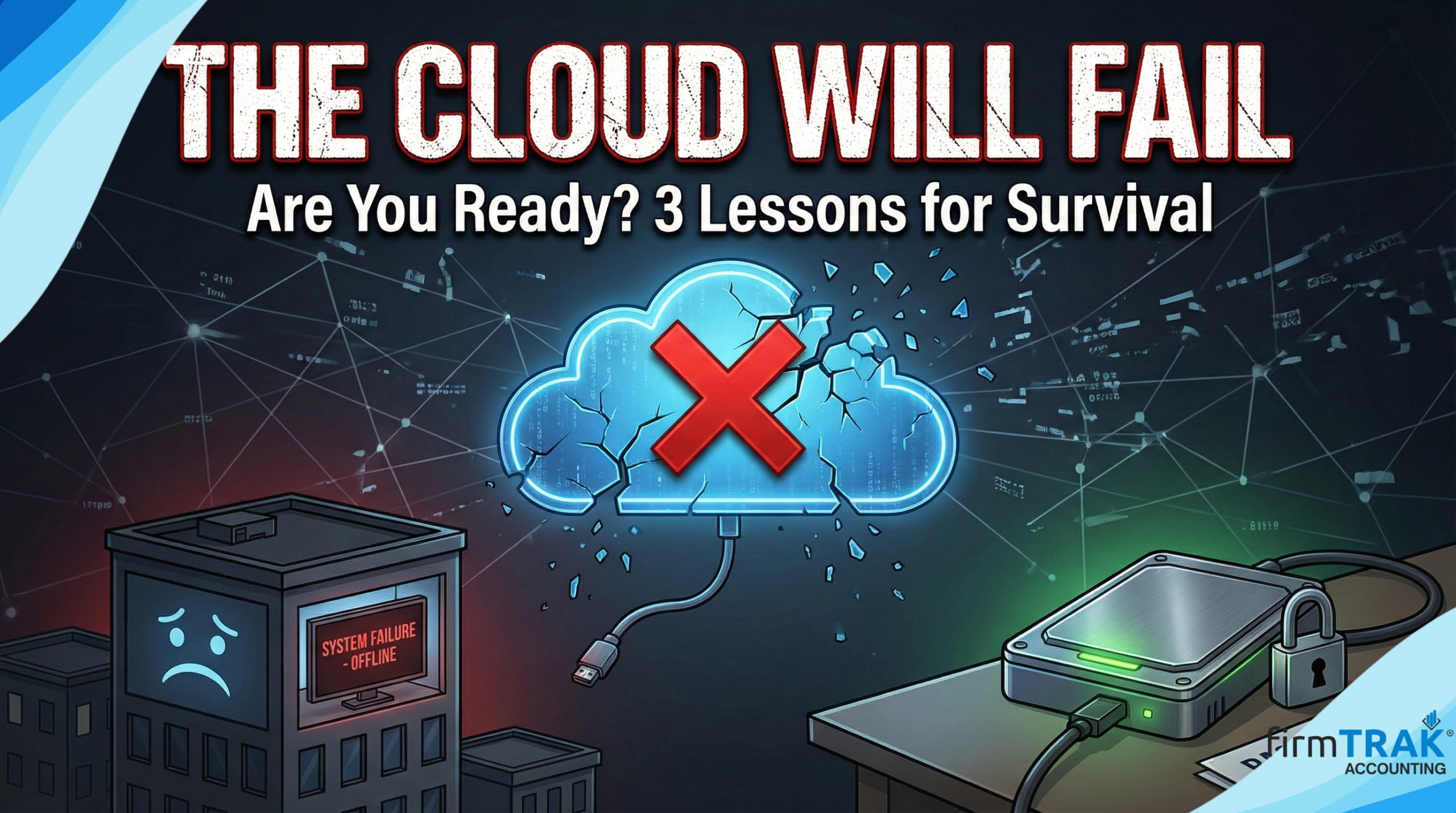
Cloud service providers love to advertise impressive uptime statistics like “99%,” which sounds nearly perfect. However, when you translate that percentage into actual business hours, the picture becomes far more alarming. A standard full-time work year consists of 2,080 hours. A 99% uptime guarantee still leaves 1% of the year—or over 20 hours—as potential downtime.
For a small business, 20 hours of being unable to access core systems, client data, or operational tools is a critical vulnerability. To put it in more practical terms, that’s the equivalent of being completely shut down for nearly three full workdays. When your entire operation relies on these cloud-based backbones, even a statistically small outage can have an outsized impact on your productivity and bottom line.
3. Takeaway 2: Your Only Real Safety Net is an Offline Backup
The core lesson from these recurring outages is that relying solely on one type of system, no matter how robust it seems, introduces a single point of failure. The most effective strategy to counter this risk is simple and timeless: back up your key files and systems to an external drive that is not connected to the internet.
This isn’t just a recommendation for the non-technical; even Carin, one of the firm’s partners who works daily with cloud-based systems, noted that she immediately turned to a backup system during the outage. This proactive mindset is becoming more critical as major tech companies push users deeper into cloud dependency. For instance, with the rollout of Windows 11, Microsoft makes it increasingly difficult for users to store files locally instead of on OneDrive. This default setting makes a conscious, manual offline backup strategy more essential than ever.
For professional organizations like law firms, this strategy is doubly important. It not only protects the immense amount of hard work already invested in client matters and cases but also preserves the strict confidentiality that clients depend on, keeping sensitive information insulated from widespread internet disruptions.
4. Takeaway 3: The Experts Are Surprised It Doesn’t Break More Often
The architecture of the modern internet is surprisingly fragile. A vast ecosystem of businesses, from small startups to global enterprises, often relies on a single provider like AWS. This consolidation of services means that one failure can have a cascading effect across the entire digital landscape. According to a recent Wired article on the subject, the real surprise isn’t that these outages happen, but that they don’t happen more frequently.
As one analysis noted, the experts behind these massive platforms have a sobering perspective on their own creations:
“their sort of overall theme of their article was they’re surprised it doesn’t happen more often. So take that for what it’s worth that a mega corp like Microsoft and AWS. They’re like, I’m surprised it’s up as much as it is, but it shouldn’t have taken them as long to fix it as it as it did.”
This insight is a stark reminder for small businesses. The issue isn’t just that the cloud can fail, but that recovery can be unpredictably slow. If the very architects of our digital world are surprised by its stability and critical of its recovery time, relying on their systems without a personal safety net is not just a risk—it’s a gamble.
5. Conclusion: Use Downtime as a Wake-Up Call
Ultimately, these annual outages should be treated as more than just a temporary inconvenience. Each disruption is a free, real-world fire drill—a valuable opportunity to see where your vulnerabilities lie. Instead of waiting for the next crisis, use this latest outage as a catalyst to “reevaluate your plans.” This reevaluation should also include a call to your insurance provider to understand what, if any, coverage you have for business interruptions caused by third-party outages.
By understanding the real-world meaning of uptime percentages and embracing the simple security of an offline backup, you can protect your business from the inevitable moments when the cloud fails. Ask yourself a simple question: If the cloud disappeared for a week, would your business still be standing?

A Senate Report Used AI to Predict a Job Apocalypse. Here Are 5 Takeaways You Can’t Ignore.

Introduction: The Elephant in the Room is an Algorithm

Public and professional discourse is saturated with curiosity, excitement, and a palpable sense of anxiety about the impact of artificial intelligence on the future of work. Will AI create a new era of prosperity, or will it render millions of jobs obsolete? While much of this conversation has been speculative, a recent, explosive report from the U.S. Senate Health, Education, Labor and Pensions (HELP) Committee has added a concrete and alarming forecast to the debate.

In a move of profound, almost poetic irony, the committee leveraged OpenAI’s own technology to forecast its societal impact. By directing ChatGPT to analyze federal job descriptions across the entire U.S. economy, they generated a stark headline prediction: artificial intelligence and automation could destroy 97 million U.S. jobs within the next decade. This finding, derived from the very technology reshaping our world, sets a serious stage for a conversation about what comes next. Here are five critical takeaways from the report that demand our attention.

——————————————————————————–

1. The Sheer Scale of the Prediction is Staggering

The core finding of the Senate report is its sheer magnitude. The ChatGPT-based model predicted that AI and automation could replace 97 million jobs over the next ten years. The authors arrived at this figure by having the AI analyze tasks detailed in the federal government’s Occupational Information Network (O*NET). This “meta” approach—using AI to forecast its own impact—lends a unique and sobering weight to the conclusion. However, the report’s authors offer a critical caveat, stating, “The reality is no one knows exactly what will happen…it represents one potential future in which corporations decide to aggressively push forward with artificial labor.”

The displacement is not predicted to be evenly distributed. The report identifies specific occupations facing extreme levels of disruption, including the potential replacement of 89% of fast food and counter workers, 83% of customer service representatives, and 47% of heavy and tractor-trailer truck drivers. The report underscores the gravity of this shift, noting that traditional advice for displaced workers may no longer apply in this new paradigm.

“Artificial labor could not only put millions of people out of work from their existing job. It could also replace new jobs that could have been created. A factory worker who loses their job cannot be told to learn to code if artificial labor also takes the coding job.”

——————————————————————————–

2. It’s Not Just Blue-Collar Anymore

A key takeaway from the report is the profound impact on white-collar professions, challenging the long-held assumption that automation primarily threatens manual or repetitive blue-collar tasks. The analysis includes jarring predictions for historically secure professions, signaling that the digital moat protecting cognitive labor from automation has been breached.

The report forecasts the potential replacement of 64% of Accountants and Auditors, 54% of Software Developers, and 47% of General and Operations Managers. This aligns with warnings from industry leaders who see AI making significant inroads into cognitive, rather than purely physical, labor, particularly at the entry level.

In May, Dario Amodei, the CEO of the main competitor to OpenAI’s ChatGPT, Anthropic, warned that AI could lead to the loss of half of all entry-level white-collar jobs, spiking unemployment to 10 to 20% in one to five years.

——————————————————————————–

3. Companies Are Saying the Quiet Part Out Loud

The Senate report provides compelling evidence that corporations are not just passively adopting AI for marginal efficiency gains; they are actively and openly pursuing it as a strategic tool for labor cost reduction. A review of investor transcripts, financial filings, and corporate presentations reveals a clear intent to substitute human workers with “artificial labor.”

The report highlights several striking examples of this trend:

  • AI company Artisan AI is explicitly advertising its services with the slogan to get companies to “stop hiring humans.”
  • Self-driving truck company Kodiak directly states its goal is to address challenges like “high labor costs.”
  • Another autonomous vehicle firm, Aurora, lists the advantages of its technology as including “no workers compensation” and “no ongoing driver training.”

This strategic shift is visible at the highest levels of corporate America. Giants like Amazon, which posted 59.2 billion in profits**, have laid off **27,000 people** since 2022 while its former Web Services CEO made **34.3 million. Walmart, which posted 19.4 billion in profits**, has cut **70,000 jobs** over the last five years. And JPMorganChase, with **58.5 billion in profits, says it expects to cut 10% of operations staff in the coming years. This explicit strategy of replacing human labor to boost efficiency and cut costs is not happening in a vacuum; it is the radical acceleration of an economic divergence that has been widening for half a century.

——————————————————————————–

4. This Isn’t a New Problem—It’s a Massive Escalation

The threat of AI-driven job displacement is not an entirely new phenomenon but rather a dramatic escalation of a long-term economic trend. For decades, the economic benefits of technological advancement and increased productivity have not been broadly shared with the American workforce. The Senate report frames the AI revolution as a dangerous accelerant to this existing and growing inequality.

The report’s Executive Summary cites a critical statistic that defines this decades-long divergence: Since 1973, worker productivity has surged by 150% and corporate profits have grown by over 370%, while real wages for the average American worker have actually decreased by nearly $30 a week.

Furthermore, the report notes that from 1987 to 2016, the rate of jobs lost to automation began to outpace the rate of new job creation, reversing a historical pattern where technology created more jobs than it destroyed. The current wave of AI technology threatens to hyper-accelerate this already negative trend, potentially turning a slow bleed of jobs into a hemorrhage.

——————————————————————————–

5. Not Everyone Sees a Dystopia (But Caution is Key)

To provide a more balanced perspective, it’s important to note that not all forecasts are as dire as the Senate report’s. A World Economic Forum report, for instance, offers a more optimistic outlook, estimating that AI will create a net 78 million new jobs globally—based on a churn of 92 million roles eliminated and 170 million created—by 2030.

This more nuanced view is shared by some in the business community. In a discussion of the Senate report, the consulting firm firmTRAK Solutions suggested the predictions are “a little more scary than I think that it actually will be.” From their small-business perspective, AI is more likely to be a tool that augments human workers, allowing companies to operate more efficiently and remain competitive, rather than replacing staff wholesale.

The firmTRAK analysis also points out that many jobs will remain resistant to full automation. Roles that require a significant “human touch,” emotional intelligence, and physical dexterity in unstructured environments—such as those performed by tradesmen like electricians and plumbers—will likely continue to thrive.

——————————————————————————–

Conclusion: A Choice, Not an Inevitability

The discourse around AI and the future of work is defined by a central tension: the dire warnings of massive, inequality-driving job displacement on one hand, and the optimistic vision of AI as a tool for human augmentation and net job creation on the other. The Senate report powerfully articulates the former, grounding its alarming predictions in a data-driven analysis performed by AI itself.

Ultimately, as the report concludes, the outcome is not preordained. The impact of technology on our society is not an inevitability but will be determined by a series of choices made in boardrooms, in government, and by the public.

The technology is here, but the rules are not yet written. The critical question isn’t what AI will do to our economy, but what we will collectively choose to do with it.

The End of Paper Checks & 27% Rate Hikes: 3 Financial Shifts You Didn’t See Coming

Each year brings familiar financial rituals, from the scramble to file taxes by the deadline to the slightly less urgent task of paying the annual home insurance bill. These are constants in our financial lives. But behind these familiar processes, significant and often surprising systemic changes are taking place that directly affect our wallets and how we interact with government agencies and major corporations.

These aren’t minor tweaks; they are fundamental shifts in infrastructure and policy that can appear suddenly and have immediate consequences. From the way you receive a tax refund to the consumer protections you thought you had, the ground is moving beneath our feet. This article will uncover three of the most impactful of these recent shifts, revealing what they are and why they matter to you.

——————————————————————————–

1. The Federal Government is Ending Paper Checks for Good

In a sweeping modernization effort, the IRS and other federal agencies are officially ending the use of paper checks for most transactions. This change, mandated by Executive Order 14247 signed by President Donald Trump in March 2025, will be implemented starting in January 2026 for all 2025 tax year filings. While eight in 10 taxpayers already use direct deposit for their refunds, this move makes it the standard for everyone, including business taxpayers.

The federal government cited three primary reasons for this massive transition:

  • Security: Paper checks are significantly more likely to be lost, stolen, or fraudulently altered compared to secure electronic payments.
  • Cost: Maintaining the infrastructure for paper-based payments is incredibly expensive, costing the government over $657 million in fiscal year 2024 alone.
  • Efficiency: Electronic payments are processed faster, reducing administrative delays and getting money to recipients more quickly.
2. Why a 27% Insurance Hike Can Happen Overnight

Imagine your annual home insurance bill suddenly jumping by over $1,000. That’s the reality facing homeowners in Illinois after State Farm announced a staggering 27.2% rate increase. The move, happening in the very state State Farm calls home, prompted Governor Pritzker to label the rate “extreme” and urge state legislators to take action. But how is such a dramatic hike even possible?

The core reason is a surprising gap in state law. Illinois is one of the few states that does not have an “excessive insurance rate clause” to prevent such increases. Without this key consumer protection, companies have wide latitude to raise rates. Critics, including the governor, suggest that residents of states like Illinois may be unfairly forced to subsidize the insurance company’s losses from tragedies happening “around the country.” This situation reveals a critical takeaway: the level of protection you have against sudden, massive rate hikes depends entirely on the laws in your specific state.

3. How “Going Digital” Creates a New Hurdle for the Unbanked

The government’s move to eliminate paper checks creates a new challenge for individuals without bank accounts. Under the new system, if you file your 2025 tax return without providing banking information, the IRS will hold your refund for six weeks while it sends a letter requesting your direct deposit details. This creates a substantial delay and potential hardship for those who need their money promptly.

However, this shift doesn’t leave the unbanked without options. The primary alternative is the Treasury-sponsored Direct Express® Debit Mastercard®, a prepaid card that can receive federal payments, including tax refunds, without needing a traditional bank account. Furthermore, the executive order allows for limited exceptions in cases of “undue hardship” or for individuals with no access to U.S.-based banking services. While the default is digital, these workarounds provide a critical safety net for the most vulnerable taxpayers.

Conclusion: Are You Prepared for the New Financial Landscape?

These three developments paint a clear picture: major financial and regulatory systems are rapidly shifting toward mandatory digitization, and in some cases, can have surprising gaps in consumer protection. From the final death of the paper check to the vulnerability of homeowners in certain states, the rules that govern our money are being rewritten. As our financial world continues to evolve, the real question is, how many other critical changes are happening just below the surface?

The IRS is Killing the Paper Check: 5 Surprising Things Every Taxpayer Needs to Know


Introduction: The End of an Era for Paper Checks

The U.S. government is about to write its last check—literally. While the move away from paper promises efficiency and over $657 million in savings, its true impact lies beneath the surface, creating hidden deadlines, exposing systemic flaws, and sending a clear signal that for taxpayers, digital readiness is no longer optional.

Mandated by Executive Order 14247, signed by President Donald Trump in March 2025, this shift is designed to increase security and streamline federal finances. However, before diving into the strategic implications, it’s crucial to understand one key distinction: this policy dictates how the government sends you money (like refunds and benefits), not how you send them money. For now, paying your tax bill by check remains an option, though electronic methods are strongly encouraged.

This article explores the five most impactful and unexpected takeaways from this major operational change, helping you understand what it really means for your finances.

Takeaway 1: The Real Deadline Isn’t What You Think

Initial reports caused widespread confusion by focusing on a hard stop for paper checks in September 2025. However, a crucial clarification from Denise Davis, a director at the IRS Taxpayer Services Division, provides the timeline that truly matters for individual taxpayers. The primary implementation for tax refunds will actually begin in January 2026 for the 2025 tax year.

The process will work like this: taxpayers who file their 2025 returns without providing banking information will receive a letter from the IRS prompting them to securely update their details through their Individual Online Account. To prevent fraud, the agency will not accept this information over the phone or in person. This expert clarification resolves the conflicting dates, confirming that while the transition is inevitable, taxpayers have a more practical window to prepare.

Takeaway 2: This Is Much Bigger Than Just Tax Refunds

This policy isn’t an isolated change limited to the IRS. It’s a sweeping modernization effort that affects how the entire federal government disburses funds. The shift to mandatory electronic payments also applies to other major federal transactions, including:

Social Security payments
Veterans Affairs (VA) benefits
While nearly 98% of these benefits are already sent electronically, this change codifies it as official policy for nearly all remaining recipients. It represents a fundamental overhaul of the government’s financial plumbing, demonstrating a commitment to a digital-first infrastructure that will impact tens of millions of Americans.

Takeaway 3: For Small Businesses, It Highlights a Deeper Confusion

For small businesses, this federal mandate doesn’t simplify; it illuminates a pre-existing ‘complexity tax’ paid in time and frustration across fragmented payment portals. The frustration stems from managing multiple, disconnected platforms for state and federal obligations, a pain point articulated perfectly by Richard Marvel of firmTRAK Solutions. He described the challenge of navigating systems like the federal EFTPS and various state-specific portals, each with its own set of login credentials.

it’s very difficult and confusing to try to keep track of who I’m paying or or how much I’ve paid and for what year and how much I owed…

This move, intended as a government simplification, serves as an unintentional stress test, revealing the deep-seated operational friction that already hinders small business tax compliance.

Takeaway 4: The “Flow-Through” Wrinkle Many Don’t See

The transition to all-electronic systems also brings to the surface a common point of confusion for owners of “pass-through” entities like LLCs and S-Corps. As financial expert Karen Lee Krowski noted, these business structures operate differently from traditional corporations when it comes to taxes.

The distinction is critical: these business entities file a tax return, but they typically do not pay taxes themselves. Instead, the profits “flow through” to the owners, who then report that income on their personal tax returns. This structure can easily create confusion when navigating electronic payment portals, making it unclear whether a payment is a business or personal liability. This policy change forces business owners to confront and clarify these distinctions within their own accounting.

Takeaway 5: It’s an Unofficial Wake-Up Call for Year-End Planning

Ultimately, the IRS announcement serves as more than just a policy update; it’s a timely “Public Service Announcement” for businesses and individuals to get their financial houses in order. With the end of the year approaching, this news is a powerful reminder of the importance of being organized, knowing what you owe, and having robust reporting systems in place long before tax season arrives.

Proactive planning allows for strategic decisions—like timing acquisitions or managing cash flow—to optimize your tax scenario and avoid unwelcome surprises. As Richard Marvel advises, preparation is paramount.

ignorance is not bliss… it’s better to know going into the end of the year where you’re at as opposed to waiting until March 15th and then trying to scramble and then being shocked.

This federal deadline provides the perfect catalyst for businesses to finally implement the disciplined financial planning they need to thrive.

Conclusion: More Than a Rule Change, It’s a Digital Nudge

Ultimately, the demise of the paper check is not a passive event but an active ‘digital nudge’ from the government. It clarifies the real digital-first timeline, exposes the operational complexities burdening small businesses, and serves as a powerful prompt for proactive year-end planning. It forces an uncomfortable but necessary evaluation of our own financial processes.

As the government goes fully digital, what’s the one process in your own financial life that this news is nudging you to finally modernize?

Understanding Federal Reserve Policies: Impact on Small Businesses and Inflation in 2024

Introduction

Welcome to our latest discussion from firmTRAK Solutions. Today, partners Ryan and Rich Marvel delve into the current state of Federal Reserve policies and their implications for small businesses and the broader economy. With inflation rates stabilizing and significant changes on the horizon, understanding these dynamics is crucial for business owners.

Federal Reserve Policies and Inflation

In 2023, economic analysts widely anticipated a series of interest rate decreases by the Federal Reserve. Fast forward to July 2024, and we have yet to see these predicted changes. With the upcoming election, there’s speculation about a potential rate decrease in September 2024. But what does this mean for businesses?

Disinflation and Its Effects

Disinflation, the process of slowing down inflation, has brought the rate from around 9% to a more manageable 2-3%. While this is a positive development, the prices of everyday goods that soared since January 2021 are here to stay. For instance, the cost of a gallon of milk, now at $5, is unlikely to drop but will increase at a slower rate.

Housing Market Implications

The tight housing market, as projected by Bank of America, is expected to remain constrained until the latter part of 2026. This means high home prices will persist, impacting not just potential homebuyers but also businesses involved in real estate and construction.

Strategic Business Management

  1. Retaining Key Employees: In today’s economic climate, holding onto productive employees is more critical than ever. The cost and downtime associated with hiring and training new staff make it essential to retain your top talent.
  2. Embracing Automation: Evaluate your business processes to identify opportunities for automation. Implementing technological solutions can enhance efficiency and productivity, making your existing team more effective.
  3. Outsourcing: Consider outsourcing non-core functions such as HR and bookkeeping. Services like ADP can handle HR tasks, while specialized bookkeeping firms can streamline your accounting processes, saving time and reducing errors.
  4. Reviewing Pricing Strategies: With the significant price increases since 2021, it’s an opportune time to reassess your pricing. Ensure your rates align with market conditions to maintain profitability and competitiveness.

Conclusion

Navigating the current economic landscape requires strategic planning and informed decision-making. By understanding the implications of Federal Reserve policies and adapting your business strategies accordingly, you can better position your company for success.

For more insights and personalized advice, visit us at firmtrak.com. We’re here to help you thrive in these challenging times. watch the full length video Understanding Federal Reserve Policies: Impact on Small Businesses and Inflation in 2024

The Importance of Vacation Days for Small Business Owners

Introduction

As small business owners, Ryan and Carin Weiss-Krolikowski from firmTRAK Solutions recently discussed an intriguing article from CNBC titled “Taking a Vacation from Work May Soon Become Mandatory”. This discussion highlighted the often-overlooked importance of vacation days, not just for employees but for business owners themselves.

The Current Landscape of Vacation Days

The article notes that only a small number of employers require workers to take vacation days. This lack of regulation is reflected in the culture of the U.S., where many employees do not take their full allotted vacation time. In fact, many workers take fewer than 15 paid vacation days a year. This trend can be attributed to several factors, including a heavy workload and the absence of a backup to handle tasks during their absence.

The Small Business Owner’s Perspective

As small business owners, Ryan and Carin don’t have official vacation days, making their own schedules. However, they understand the importance of vacation days for employees and the challenges in ensuring that work is covered during absences. This balancing act is crucial to maintaining a healthy work environment and preventing burnout.

Encouraging a Healthy Work Environment

Ryan and Carin advise other small business owners to reflect on their workplace environment and consider implementing policies that encourage taking time off. They emphasize the importance of recharging to prevent employee burnout, which can lead to decreased productivity and increased turnover. Establishing a vacation policy, whether mandatory or not, can help ensure that employees have the mental and physical stamina to perform well.

Legal Considerations and Policy Types

They also stress the importance of checking state laws and regulations regarding vacation policies, as these can vary significantly. For instance, the rules in Texas differ from those in California. Additionally, the type of vacation policy—such as a “use it or lose it” policy—can impact employee behavior. Ryan and Carin have observed that employees are more likely to use their vacation time when such policies are in place.

Conclusion

Finally, they caution that any mandatory vacation policy should be fair and well-thought-out to avoid potential legal issues. Small business owners should research and plan thoroughly before implementing any new policies.

For more insights and information about firmTRAK Solutions, visit firmtrak.com,  and watch the full video on our youtube channel “Mandatory Vacation: The Future of Work-Life Balance”.

Setting Your Rates: Pricing Strategies for Professional Services Firms

Introduction

Setting a price for your professional services can be difficult and complicated. While maintaining your competitiveness in the market, you want to make sure that your pricing accurately represents the value you offer to clients. This post will walk you through the process of determining your prices, going over several approaches to pricing, how to set up fees, and when to raise your charges. After reading this, you’ll be more knowledgeable and capable of selecting the best strategy for your company.

  1. Determine Your Fee Structure

It’s crucial to define your cost structure before delving into certain pricing tactics. One of the three main charge models is typically utilized by professional services firms:

  • Hourly billing: A conventional method involves billing clients according to the number of hours they labor. Although this approach is simple, it may not be the most flexible when it comes to growing your business.
  •  Flat prices: Offering clients cost consistency, flat prices may be a more alluring choice for them. But determining the appropriate flat rate necessitates having a solid grasp of the job involved.
  • Value-Based Pricing: This strategy bases your rates on what your clients believe they are getting for their money. Frequently, it results in a win-win scenario where customers are content to pay for the value they receive.


  1. Pricing for Value

Value-based pricing is gaining popularity in the professional services industry because it aligns your fees with the impact you make on your clients’ businesses. To implement this strategy:

  • Understand the Client’s Perspective: Get to know your client’s business goals, challenges, and the value they expect from your services.
  • Align Your Pricing with Value Delivered: Set your fees based on the positive impact you can make on the client’s bottom line.
  • Communicate Value: Clearly communicate how your services contribute to the client’s success and justify your fees.


  1. Different Pricing Models

Let’s now examine some various pricing strategies that will assist you hone your strategy:

  • Retainer Model: Your services are continuously accessed by clients for a set monthly price, which guarantees a consistent flow of income.
  • Project-based pricing: This works well for clients with clearly defined, time-bound needs as it involves charging a one-time price for a particular project.
  • Tiered Pricing: To accommodate a range of customer needs, provide several price tiers. This enables customers to select a service level that fits within their spending limit.
  • Subscription-Based Model: Charged on a monthly basis, clients pay a charge that is akin to retainers but may contain a predetermined amount of hours or services.


  1. Increasing Rates Over Time

As your firm grows and gains experience, you should consider raising your rates. Here’s how to do it effectively:

  • Assess Market Conditions: Keep an eye on market trends, competitors’ rates, and economic factors that could influence your pricing.
  • Communicate with Clients: Be transparent with your existing clients about rate increases, providing ample notice and discussing the value they’ll continue to receive.
  • Offer New Services: As your firm evolves, introduce new, higher-value services that can justify higher rates.
  • Gradual Increases: Rather than making sudden jumps in rates, consider implementing gradual, incremental increases over time.

Conclusion

An important part of your business plan is determining the appropriate pricing for your professional services company. Understanding your charge schedule, matching value to price, and selecting the best pricing model will help you draw in new business while maintaining the health of your company’s finances. Remember that a normal aspect of business growth is a gradual increase in rates. You’ll be well on your way to success in the professional services industry if you use these methods.