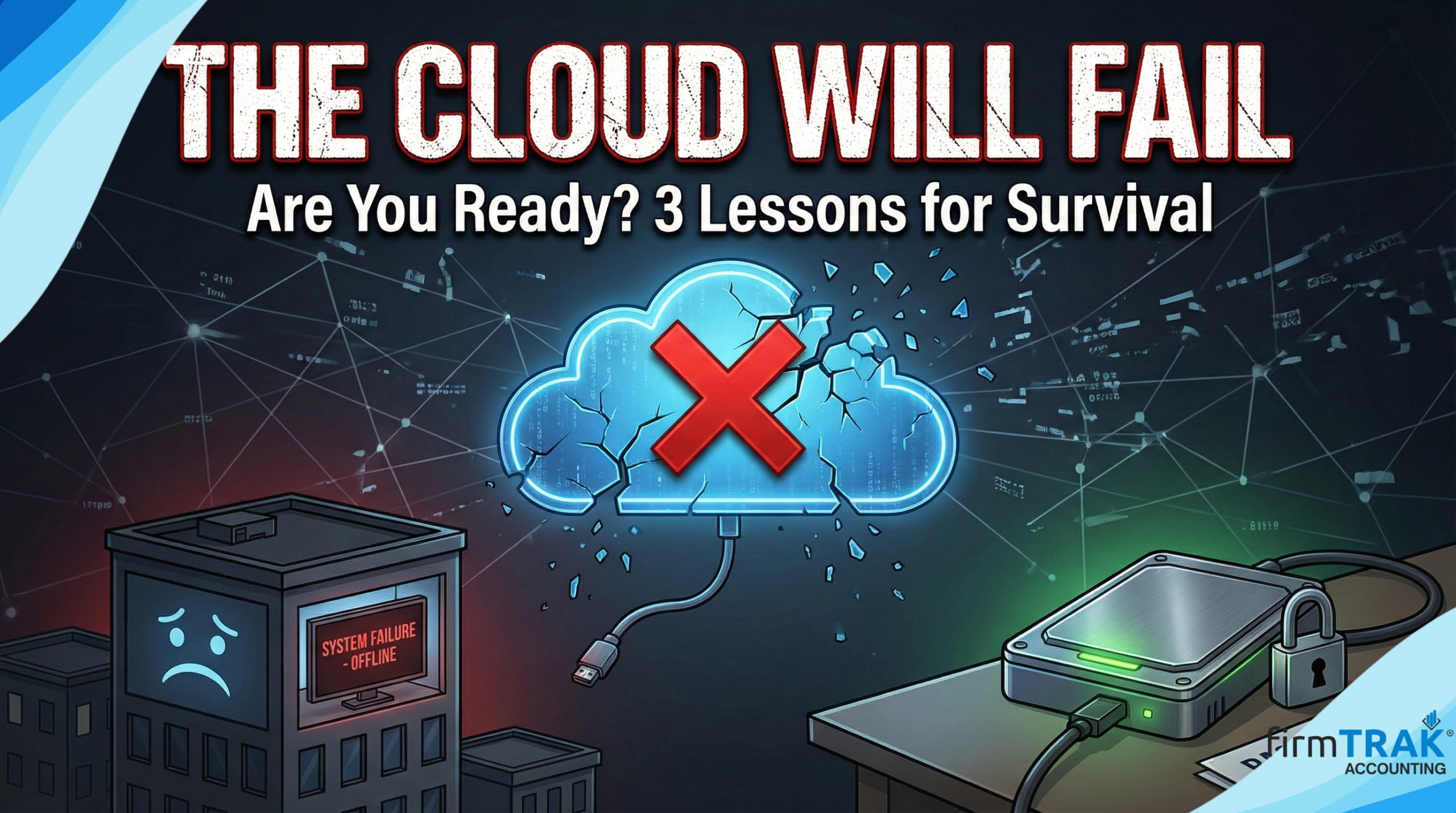
1. Introduction: The Familiar Feeling of Digital Disconnection
It’s a feeling that has become as predictable as the seasons: you try to access a critical file, log into a service, or launch an application, and nothing happens. A quick search reveals the culprit—a major cloud provider like Amazon Web Services (AWS) is experiencing a massive outage, and a significant portion of the internet has gone down with it. It’s a “Groundhog’s Day” scenario that plays out annually, reminding us of the fragility of the digital infrastructure we depend on.
While these events are often short-lived, they serve as a powerful, real-world stress test for our data safety strategies. The purpose of this article is not just to rehash the news of another outage but to explore the critical, and often counter-intuitive, lessons these disruptions teach us. For any business, especially small ones, understanding these takeaways is essential for building true digital resilience.
2. Takeaway 1: “99% Uptime” Still Means Your Business is Closed for Three Days a Year
Cloud service providers love to advertise impressive uptime statistics like “99%,” which sounds nearly perfect. However, when you translate that percentage into actual business hours, the picture becomes far more alarming. A standard full-time work year consists of 2,080 hours. A 99% uptime guarantee still leaves 1% of the year—or over 20 hours—as potential downtime.
For a small business, 20 hours of being unable to access core systems, client data, or operational tools is a critical vulnerability. To put it in more practical terms, that’s the equivalent of being completely shut down for nearly three full workdays. When your entire operation relies on these cloud-based backbones, even a statistically small outage can have an outsized impact on your productivity and bottom line.
3. Takeaway 2: Your Only Real Safety Net is an Offline Backup
The core lesson from these recurring outages is that relying solely on one type of system, no matter how robust it seems, introduces a single point of failure. The most effective strategy to counter this risk is simple and timeless: back up your key files and systems to an external drive that is not connected to the internet.
This isn’t just a recommendation for the non-technical; even Carin, one of the firm’s partners who works daily with cloud-based systems, noted that she immediately turned to a backup system during the outage. This proactive mindset is becoming more critical as major tech companies push users deeper into cloud dependency. For instance, with the rollout of Windows 11, Microsoft makes it increasingly difficult for users to store files locally instead of on OneDrive. This default setting makes a conscious, manual offline backup strategy more essential than ever.
For professional organizations like law firms, this strategy is doubly important. It not only protects the immense amount of hard work already invested in client matters and cases but also preserves the strict confidentiality that clients depend on, keeping sensitive information insulated from widespread internet disruptions.
4. Takeaway 3: The Experts Are Surprised It Doesn’t Break More Often
The architecture of the modern internet is surprisingly fragile. A vast ecosystem of businesses, from small startups to global enterprises, often relies on a single provider like AWS. This consolidation of services means that one failure can have a cascading effect across the entire digital landscape. According to a recent Wired article on the subject, the real surprise isn’t that these outages happen, but that they don’t happen more frequently.
As one analysis noted, the experts behind these massive platforms have a sobering perspective on their own creations:
“their sort of overall theme of their article was they’re surprised it doesn’t happen more often. So take that for what it’s worth that a mega corp like Microsoft and AWS. They’re like, I’m surprised it’s up as much as it is, but it shouldn’t have taken them as long to fix it as it as it did.”
This insight is a stark reminder for small businesses. The issue isn’t just that the cloud can fail, but that recovery can be unpredictably slow. If the very architects of our digital world are surprised by its stability and critical of its recovery time, relying on their systems without a personal safety net is not just a risk—it’s a gamble.
5. Conclusion: Use Downtime as a Wake-Up Call
Ultimately, these annual outages should be treated as more than just a temporary inconvenience. Each disruption is a free, real-world fire drill—a valuable opportunity to see where your vulnerabilities lie. Instead of waiting for the next crisis, use this latest outage as a catalyst to “reevaluate your plans.” This reevaluation should also include a call to your insurance provider to understand what, if any, coverage you have for business interruptions caused by third-party outages.
By understanding the real-world meaning of uptime percentages and embracing the simple security of an offline backup, you can protect your business from the inevitable moments when the cloud fails. Ask yourself a simple question: If the cloud disappeared for a week, would your business still be standing?